Scientific Research & Computational Biology

Accelerate Your Research with Published Scientific Expertise

From Research Ideas to Rigorous, Publication-Ready Studies

Advance your scientific research with specialized expertise in bioinformatics, AI-driven drug discovery, cancer genomics, clinical research, and systematic reviews. We support researchers through scientifically rigorous methods, reproducible analysis, and evidence-based research collaboration.

6 Research Publications Featured in 2026 Journals
4 Core Domains Bioinformatics, CADD, Oncology, Meta-Analysis
Interdisciplinary Expertise Wet-Lab Context & In Silico Rigor
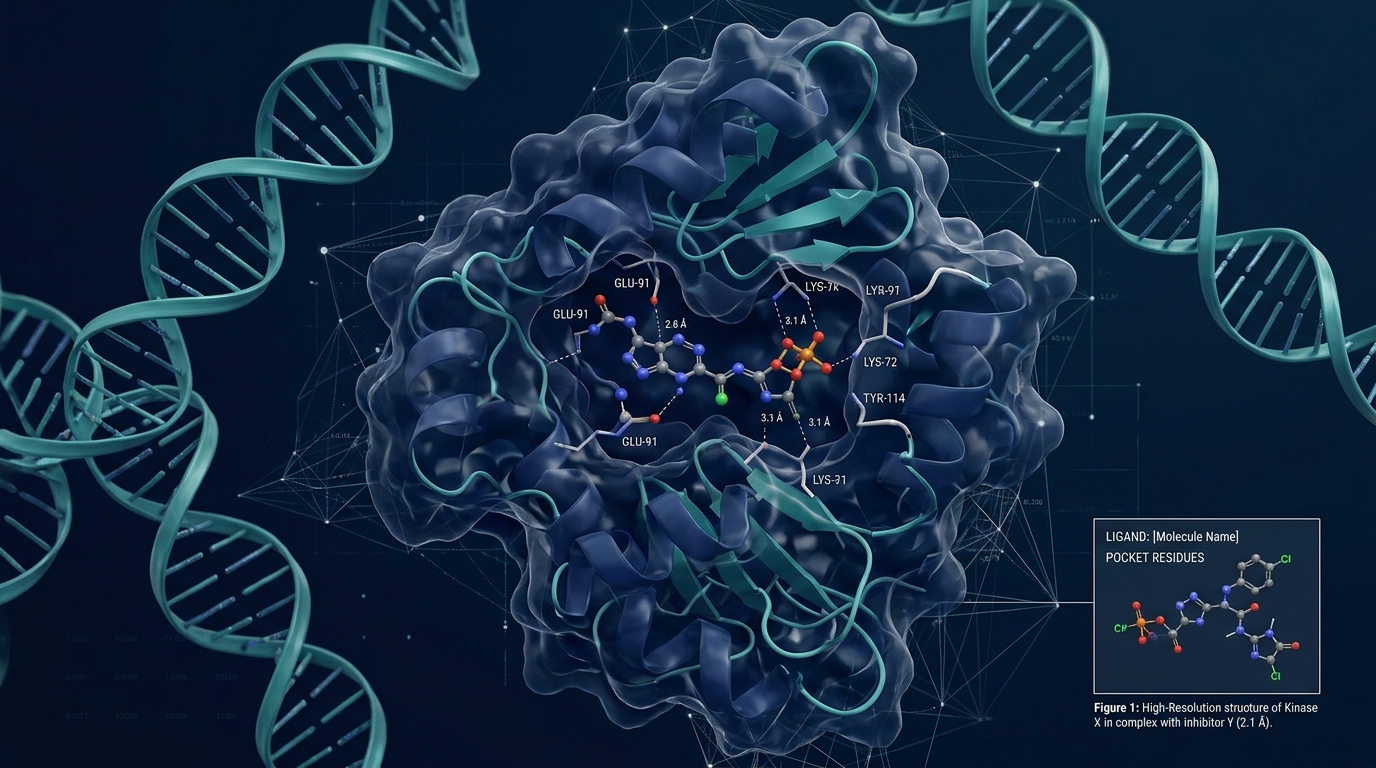
3D Protein Structure and In Silico Molecular Docking Binding Pocket Visualization
Figure: High-Resolution Structural Biology & In Silico Docking 2.1 Å Resolution
Published Scientific Expertise

Trusted Academic Expertise Backed by Published Research

Our scientific research portfolio spans computational biology, oncology, clinical and translational medicine, artificial intelligence, and evidence synthesis.

Bioinformatics & CADD

AI-driven drug discovery, molecular docking, molecular dynamics, and target prioritization.

Explore Pipelines →

Oncology & Cancer Genomics

TNBC genomic landscapes, MASH-associated HCC transcriptomics, and biomarker exploration.

View Studies →

Clinical & Translational Research

Cardiovascular risk modeling and evidence-based evaluations of therapeutic interventions.

Read Clinical Papers →

Systematic Reviews & Meta-Analyses

PRISMA-based evidence synthesis, clinical meta-analysis, and statistical evaluation.

PRISMA Protocols →
Bibliographic Validation • Peer-Reviewed

Featured Research Publications — 2026

Explore the scientific questions, computational approaches, and clinical research themes represented in our publication portfolio. All papers listed have verified author attribution.

Cancer Transcriptomics ✓ Verified Peer-Reviewed

Reciprocal MDK–THRB lipid-oxidation transcriptional programs in MASH-associated hepatocellular carcinoma

3 Biotech • 2026 (Vol 16:474)

Authors: V. Muniappan, K. Dwivedi, S. Sakila, J. Sejpal, P. Varadhan, K. Santhosha, S. Ramachandiran, et al.

Research Focus: Two-cohort human transcriptomic study demonstrating reciprocal MDK–THRB regulatory axes and fatty-acid oxidation signatures in liver cancer progression.

Clinical Therapeutics ✓ Verified Peer-Reviewed

Oral Versus Injectable Incretin-Based Anti-Obesity Therapies: An Integrated Computational and Evidence-Based Comparison

OMICS: A Journal of Integrative Biology • 2026

Authors: Lorika Sahu, Laxmipriya Nayak, Aakankshya Tripathy, Sivaramakrishnan Ramachandiran, Baranika Gunasekaran, Tejasri Lokaiah

Research Focus: Computational docking, dynamics, and clinical evidence-based synthesis evaluating orforglipron, semaglutide, and tirzepatide therapeutic mechanisms.

Cardiovascular Research ✓ Verified Peer-Reviewed

Lipoprotein(a) and premature myocardial infarction: Mechanistic insights and implications for PCI-era residual risk

Int. J. of Cardiology: Cardiovasc Risk Prev • 2026

Authors: Santosh Mohanlal Modani, Shravan Kumar Rampelly, Shafi Palagiri, Samiya Begum Ibrahim, Sivaramakrishnan Ramachandiran

Research Focus: Molecular and clinical implications of genetically determined Lp(a) levels driving residual ischemic risk following percutaneous coronary intervention (PCI).

Computational Drug Discovery ✓ Verified Peer-Reviewed

Structure-Based Prioritization of Metformin-Associated Targets Across Multiple Disease Contexts

In Silico Research in Biomedicine • 2026

Authors: K. Vijayakumar, N. Mathur, D. Das, A. Chaudhary, P. Varadhan, S. K. Mishra, S. Ramachandiran

Research Focus: In silico target mapping across metabolic, oncological, neurodegenerative, reproductive, and aging-inflammatory biological axes.

AI-Driven Drug Discovery ✓ Verified Peer-Reviewed

Integrated computational and machine-learning pipeline for identification of flavonoid-based PIKfyve inhibitors

Next Research • 2026

Authors: A. Chaudhary, V. Solanki, K. K. Goel, S. Thapliyal, D. Yadav, Ishika, S. Ramachandiran

Research Focus: GaMD pharmacophore modeling, ensemble docking, and experimental validation targeting PIKfyve for antiviral and anticancer therapeutics.

Cancer Genomics ✓ Verified Peer-Reviewed

Genomic landscape of triple-negative breast cancer in South Asian populations: a systematic review

BMC Cancer • 2026

Authors: S. Bhattacharyya, J. V. Thomas, A. Prasad, A. Deep, FNU Bhuvan, S. Ramachandiran, R. K. Garanayak

Research Focus: Population-specific genomic characteristics, mutation frequencies, and actionable clinical biomarkers in South Asian TNBC cohorts.

End-to-End Scientific Capabilities

Specialized Scientific Research Services

Computational, analytical, and evidence-based solutions for modern biomedical research.

Bioinformatics & Omics Research

Comprehensive high-throughput biological data analysis using reproducible pipelines for sequencing and microarray cohorts.

Key Capabilities
  • RNA sequencing & transcriptomics
  • Differential gene expression (DESeq2, edgeR)
  • GEO and TCGA data mining
  • Pathway & GO enrichment (clusterProfiler)
  • Candidate biomarker exploration
  • Protein–protein interaction (STRING, Cytoscape)
Discuss This Service

Computer-Aided Drug Discovery

Structure-based and ligand-based in silico drug design to evaluate binding modes and optimize lead compounds.

Key Capabilities
  • Molecular docking (AutoDock Vina, SwissDock)
  • Molecular dynamics simulation (GaMD / GROMACS)
  • Virtual high-throughput screening
  • Pharmacokinetics & ADMET prediction
  • Protein–ligand interaction profiling (PyMOL)
  • Structure-based target identification
Discuss This Service

AI & Machine Learning

Predictive biomedical modeling, high-dimensional classification, and feature selection for precision health research.

Key Capabilities
  • Biomedical predictive classification models
  • Feature selection & LASSO / Random Forest
  • Biomarker prioritization & ranking
  • Disease phenotype stratification
  • Machine learning for drug candidate scoring
  • Cross-validation & ROC-AUC evaluation
Discuss This Service

Cancer Genomics

Elucidating oncogenic driver alterations, copy-number variations, and tumor immune microenvironment dynamics.

Key Capabilities
  • Somatic & germline mutation analysis
  • Cancer transcriptomics & survival modeling
  • Oncogenic molecular pathway mapping
  • Comparative population genomics (e.g. TNBC)
  • Candidate diagnostic & prognostic biomarkers
  • Tumor microenvironment deconvolution
Discuss This Service

Systematic Reviews & Meta-Analyses

Methodologically rigorous evidence synthesis adhering strictly to PRISMA 2020 guidelines and Cochrane standards.

Key Capabilities
  • PRISMA 2020 protocol & PROSPERO registration
  • Multi-database structured search & screening
  • Standardized data extraction forms
  • Risk-of-bias assessment (RoB 2, ROBINS-I)
  • Forest plots & pooled effect size calculations
  • Heterogeneity, subgroup & sensitivity analysis
Discuss This Service

Scientific Manuscript Support

Transforming complex computational findings into clear, compelling, and ethically formatted manuscripts.

Key Capabilities
  • Methodological description & reproducible workflows
  • Peer-review quality figures & statistical tables
  • Reporting-guideline compliance (PRISMA, STROBE)
  • Substantive scientific editing & clarity refinement
  • Target journal formatting & response to reviewers
  • Strict adherence to ICMJE ethics (no ghostwriting)
Discuss This Service
Scientific Research Laboratory and Computational Multi-Omics Workstation
Analytical Rigor • Reproducible Workflows
Academic Integrity & Methodological Precision

Scientific Rigor at Every Stage of Research

We bridge the gap between biological hypotheses and publication-ready computational evidence, maintaining uncompromised standards of data integrity.

✓
Published Research Experience
Track record demonstrated through peer-reviewed articles in BMC Cancer, OMICS, and 3 Biotech.
✓
Reproducible Methodologies
All analytical pipelines (Python, R, AutoDock) provided with verifiable code, seeds, and parameters.
✓
Interdisciplinary Expertise
Seamless integration across molecular biology, oncology, pharmacology, and bioinformatics.
✓
Customized Analytical Workflows
Bespoke computational strategies tailored to your exact hypothesis rather than one-size-fits-all scripts.
✓
Clear Scientific Interpretation
Data translated into publication-grade figures, biological mechanistic insights, and clear reporting.
✓
Ethical Collaboration Commitment
Full NDA confidentiality, transparent co-authorship guidelines, and zero tolerance for fabricated data.
Technical Architecture

Advanced Computational Research Capabilities

Supported software pipelines, libraries, and statistical frameworks verified across our research projects.

Bioinformatics & Multi-Omics Pipelines

Our computational biology framework leverages high-throughput Python and R workflows to ingest, normalize, and analyze raw sequencing and microarray data from international public repositories.

Python (Biopython, Scanpy) R (Bioconductor) DESeq2 / edgeR NCBI GEO Data Mining TCGA-LIHC & TCGA-BRCA clusterProfiler (GO / KEGG) Cytoscape Network Biology
Differential Expression & Transcriptomics
Robust statistical modeling with false discovery rate (FDR / Benjamini-Hochberg) control across multi-cohort clinical samples.
Pathway & GSEA Enrichment
Gene Set Enrichment Analysis (GSEA) mapping biological hallmarks, oncogenic signatures, and metabolic pathways.
Structured Engagement Roadmap

How Our Research Collaboration Works

A transparent five-step workflow designed to deliver scientific rigor, predictable milestones, and publishable outcomes.

01
Share Your Research Idea
Initial confidential consultation to discuss your biological hypothesis, project objectives, and targeted research questions.
02
Feasibility Assessment
Rigorous literature review, dataset availability verification (TCGA, GEO, PDB), and computational feasibility audit.
03
Customized Methodology
Development of a structured analysis protocol, computational algorithm selection, and defined milestone deliverables.
04
Analysis & Validation
Execution of bioinformatics/CADD pipelines, statistical hypothesis testing, and generation of reproducible logs.
05
Interpretation & Manuscript
Delivery of publication-grade vector figures, comprehensive result interpretation, and journal formatting support.
Academic & Clinical Reach

Research Support Across Academic and Biomedical Disciplines

Tailored computational expertise catering to researchers at every stage of their academic and professional careers.

PhD Scholars

Accelerate doctoral thesis milestones with reproducible omics pipelines, docking data, and publication support.

Postdoctoral Researchers

Gain advanced multi-omics integration and in silico screening to produce high-impact fellowship outputs.

Medical Professionals

Translate clinical questions into rigorous PRISMA meta-analyses and evidence-based therapeutic evaluations.

Faculty & Academicians

Co-author peer-reviewed papers, generate preliminary grant proposal data, and scale departmental productivity.

Research Institutions

Access specialized computational infrastructure and target prioritization pipelines on a collaborative consultancy basis.

Confidential Discussion

Tell Us About Your Research Project

Share your research requirements and begin a confidential scientific discussion. We review all project details under academic non-disclosure standards.

Used for direct collaboration updates and research plan sharing.
Do not share unpatented confidential proprietary sequences here; we will execute an NDA first if required.
Continue on WhatsApp
Clear & Ethical Guidance

Frequently Asked Questions

Responsible answers regarding our collaborative scope, methodologies, data policies, and academic integrity commitments.

Yes. Many successful scientific projects begin with an early hypothesis. During our preliminary feasibility assessment, we examine your core concept against indexed literature, evaluate whether suitable public cohorts (TCGA, GEO, ArrayExpress) or experimental assays exist, and outline a realistic computational roadmap to test the hypothesis.

Yes. We frequently integrate multi-cohort public data from NCBI GEO (Gene Expression Omnibus), TCGA (The Cancer Genome Atlas), ArrayExpress, 1000 Genomes, COSMIC, GTEx, and the Protein Data Bank (PDB). We handle cross-platform batch-effect correction, normalization, and quality control.

Yes. We utilize standard tools including AutoDock Vina, PyMOL, GROMACS, and Gaussian accelerated Molecular Dynamics (GaMD). Our deliverables include binding energy calculations (kcal/mol), residue interaction diagrams (hydrogen bonds, hydrophobic contacts), RMSD/RMSF trajectory plots, and publication-ready 3D structural figures.

Yes. Our systematic review workflows follow the PRISMA 2020 statement and Cochrane Handbook guidelines. We assist with PROSPERO protocol registration, multi-database search strings (PubMed, Scopus, Web of Science, Embase), dual-reviewer screening, Cochrane risk-of-bias (RoB 2, ROBINS-I) scoring, forest plots, heterogeneity (I²) quantification, and publication bias assessment.

Yes. We write comprehensive computational methodology descriptions, generate 300+ DPI vector figures, format statistical tables, and assist in addressing reviewer feedback. All work is conducted in full compliance with ICMJE author guidelines—we do not engage in essay mill practices or ghostwriting.

No. In accordance with academic integrity standards and COPE (Committee on Publication Ethics) guidelines, no legitimate scientific researcher or consultancy can guarantee journal publication. Acceptance decisions depend solely on independent peer review and journal editorial discretion.

What we do guarantee is methodologically sound computational analysis, rigorous statistical verification, publication-grade figures, and responsive support through journal revision cycles.

Pricing is project-specific and determined by the computational complexity, dataset scale, specialized software hours (e.g. GPU-accelerated molecular dynamics vs. standard docking), and the depth of manuscript support required. Following the initial scientific feasibility assessment, we provide a transparent, milestone-based proposal.

Yes. We execute formal Non-Disclosure Agreements (NDAs) prior to reviewing proprietary experimental sequences or unpublished hypotheses. All project data is stored on encrypted drives and deleted or archived strictly according to the client’s directives.

Scientific Research Partnership

Your Next Scientific Breakthrough Begins with a Strong Research Plan

Connect with experienced research collaborators to explore scientifically rigorous approaches tailored to your project.

Chat with Scientific Lead
Discuss Your Research on WhatsApp